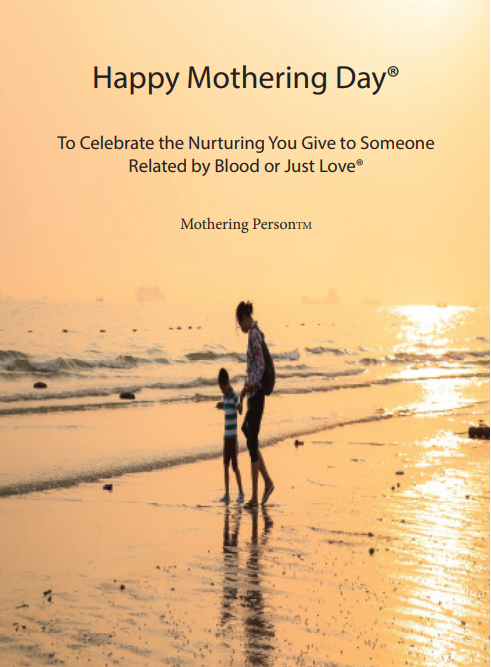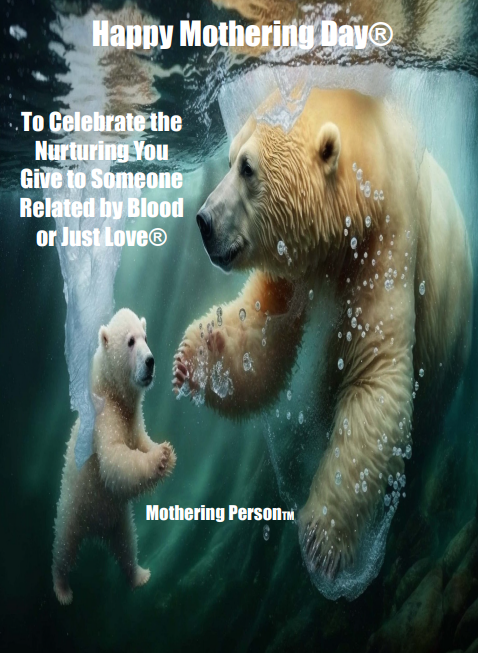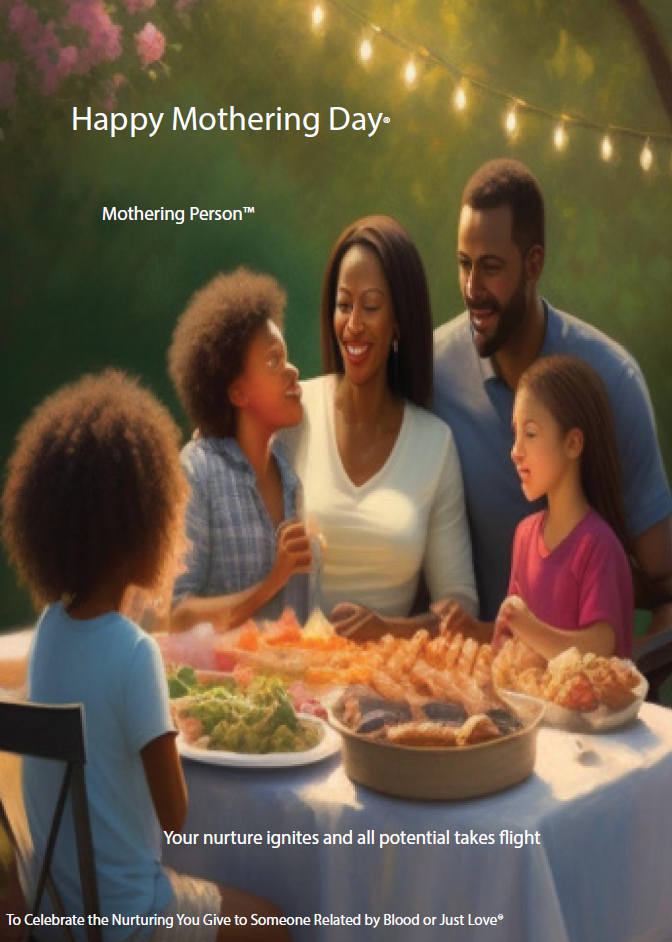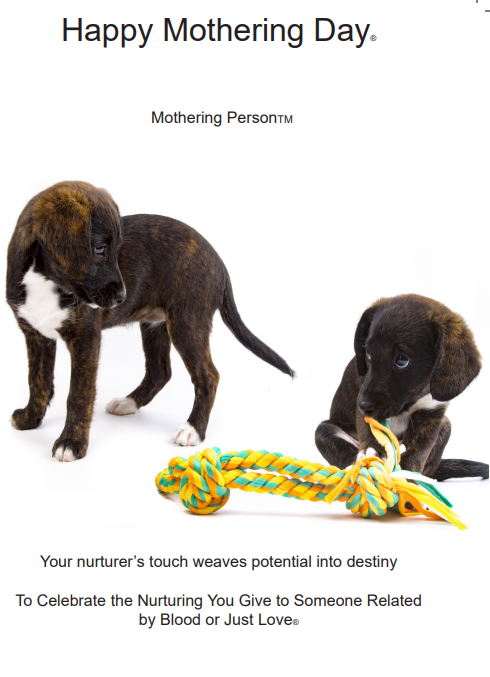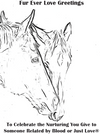
We distinguish this unique company from other companies in the greeting card industry by our trademarks that we clearly and separately display on all our cards, mugs, jewelry, and other products, both on the front and back:

Fathering Person®

Mothering Person®

Happy Mothering Day®

Happy Fathering Day®

To Celebrate the Nurturing You Give to Someone Related by Blood or Just Love®

How these trademarked terminologies will improve the mental health in our society:

This project is essentially a language-based intervention to increase social
connectedness, and it works through several well-studied psychological and social mechanisms,
disseminated through the continuous giving of customary societal tools. Here’s a clear breakdown
of what it does and why it helps, using some of our trademarked terminologies of love and
gratitude such as.. “Fathering Person®.. happy mothering day®” framework as the example.
How inclusive, action-based terminology enhances
connectedness
1. Shifts identity from status to behavior
Traditional terms like mother, father some with step, or bonus, or guardian are:
 Role-bound
 Historically loaded
 Sometimes exclusionary or painful (death, divorce, estrangement, infertility,
LGBTQ+ families)
 Sometimes status bound
By centering language on nurturing and mentoring behaviors, the focus becomes:
 What someone does rather than what they’re called
 Contribution instead of hierarchy
 Care instead of biology
This allows more people to see themselves as valid and valued without having to justify their role.
2. Broadens the circle of belonging
Terms like….Fathering Person®….or….Happy Mothering Day®…defined as
…To celebrat the nurturing you give to someone related by blood or just love®
do three powerful things:
 Include foster, chosen, LGBTQ+, blended, and nontraditional families
 Reduce “in-group vs out-group” dynamics
 Legitimize relationships that society often overlooks

Belonging is one of the strongest predictors of mental health, especially for children and
adolescents.
3. Reduces social comparison and stigma
When holidays and recognition are tied to fixed titles, people often feel:
 “Less than” (step, bonus, not biological)
 Invisible (mentors, grandparents, older siblings, caregivers, nurturers)
 Excluded (children without traditional parents)
Action-based language:
 Normalizes diverse nurturing/caregiving/mentoring realities
 Removes the need to explain or label oneself
 Lowers shame and social anxiety around public celebrations
This is especially impactful in school settings, where comparison pressure is high.

4. Validates lived experience — which strengthens emotional safety
Our field testing results makes sense because:
 Children respond strongly when their reality is named and respected
 Recognition of who shows up for them builds trust and emotional regulation
 Feeling “seen” increases willingness to engage, share, and seek support
Emotional safety is foundational for learning, resilience, and healthy development.

5. Supports mental health in an AI-mediated world
In an increasingly digital and AI-driven environment:
 Human connection can feel abstract or transactional
 Titles and categories can feel impersonal or rigid
 People seek affirmation that their care matters

This terminology reinforces:
 Human values (care, mentorship, nurturing, presence)
 Relational meaning over labels
 Emotional continuity in a rapidly changing world
That directly supports feelings of support, relevance, and connection, which buffer against loneliness and
alienation.
6. Encourages prosocial behavior
When nurturing is publicly recognized:
 People are more likely to engage in mentoring, nurturing, and caregiving
 Care becomes a shared community value
 Children learn that love and support take many forms
This creates a positive feedback loop: recognition → connection → wellbeing → more
nurturing.

Why the school-based results matter
The fact that this approach:
 Was approved by a principal
 Supported by PTA parents/volunteers
 Generated heartfelt student feedback
 Was praised by educational and professional publications
…suggests it’s not just philosophically sound, but practically effective, scalable, and
emotionally resonant.
In one sentence
By replacing title-based recognition with behavior-based language, this approach
expands belonging, reduces exclusion, validates diverse family structures, and
strengthens mental health by affirming that nurturing—not labels—is what truly
connects us
.

The U.S. Air Force training manual for cadets suggests using language that goes beyond traditional terms like "mom" or "dad." This recommendation is made to show sensitivity towards cadets who might not have one or both parents but instead have caregivers or nurturers who have played significant roles in their lives, even if their presence was temporary. The aim is to recognize and honor the diverse family structures and support systems that cadets may come from.

The Florida Education Association says that all nurturers and caregivers deserve their own terms of recognition, such as our trademarked, action terms of love and caring seen above.

These terms encompass anyone who embodies nurturing qualities, deserving to be shown gratitude with our cards on every holiday and special occasion, whether they are a biological mother or father, a caregiver, a pet parent, a coach, or simply someone who shows love and caring to others. It has a broad, equal opportunity, and inclusive feel to it.

Please see our emotionally IMPACTFUL POEM, which was granted a copyright in 2006, at the bottom of the "About Us" section. Do not cry, as this project has and will continue to help so many.

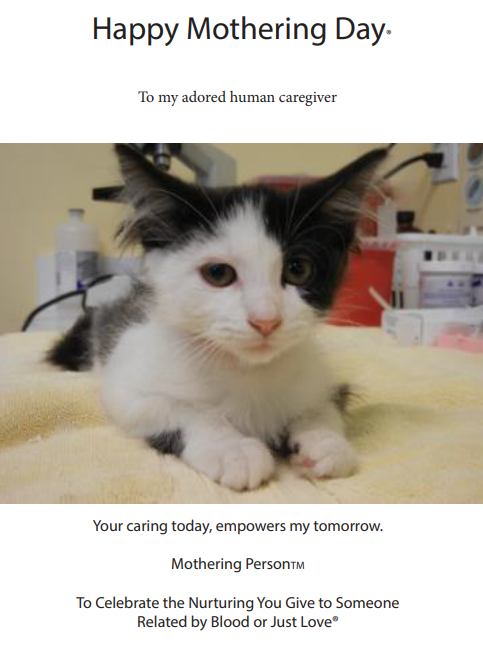
Please see one of our adorable pet cards further down.

This greeting card line improves mental health by encouraging the nurturing of each other whether in a traditional relationship/family or modern, non-traditional relationship/family. The cards provide equal opportunity to all children and adults in all types of families to find the appropriate greeting card as now we shifted the focus away from just traditional names, titles (i.e., mother/mom, father/dad), and status (i.e., like, step, stepped up, or bonus) and focus on our action terminologies of nurturing.
This line of cards is vital in our current society, as now 80% of U.S. families are non-traditional. This mental health project is dedicated to the 3,000 children who lost a mother/father in the 9/11 attacks, to the children of our military who lost one defending our country, to the brave children who opened their hearts and described the pain of their loss and then the discomfort they feel from the process of how to address and how to refer to new adults (or new roles of adults in their lives) into their lives, and to the dedicated PTA adults who gave their time in testing these terminologies in our public schools producing the empirical observations confirming the efficacy this new verbiage in improving mental health through elevating all types of caregivers and mentors by providing to them their own terminology.

To date, there has not been one type of family structure that these “action “ terminologies did not apply to and make better, from extreme left to extreme right, and everyone in between. This included biological parents who want more variety in greeting cards saying that these terminologies focus on their hard work in raising their children, to adults giving cards to other adults enhanced by the complimenting of their nurturing of each other and the children in their lives, as we support, help, and teach each other.  Finally, we wish to give our thanks to our heroes for the bravery, empathy, and compassion in the protection of and betterment of the people in society: Princess Diana, Mortimer Patchen (a nose gunner in WWII, credited with shortening the war), and Lawrence Moses (WWII 10th Mountain Division who was awarded the Silver Star posthumously).

Also, more than 4 in 10 (42%) of students feel persistently sad or hopeless, nearly one-third (29%) experienced poor mental health, more than 1 in 5 (22%) students seriously considered attempting suicide, and 1 in 10 (10%) attempted suicide, almost a third of U.S. adults report symptoms of either depression or anxiety, and 1 in 25 adults has a serious mental illness. While close to 80% of U.S. families are non-traditional, these cards have been reported to benefit our traditional families as well. A portion of the profit from this mental health project will go toward non-profits that seek to improve mental health.

This line of greeting cards was field tested in Stoneman Douglas High school’s associated middle school and met with resounding praise from children and adults in all types of families and interpersonal relationship structures. We thank the school’s principal and PTA for approving this field testing and recognize the students and families in the MSD High School zone.

One biological father said, “best card I ever got for Father’s Day” and put it up on his bedroom wall. "

One grandmother bringing up her grandson said, “best card I ever got for my Birthday."

One mentor in a youth program said, “my mentee by giving me this card showed me that my contribution to this student will last a lifetime."

One father reported that he said to his wife who gave him a card, that he feels so much more appreciated for all he does for the family’s children.

As a result of this successful field testing, this line of cards received recognition in articles of high praise from renowned organizations such as the NEA, FEA, Nova Southeastern University, Stationery Trends Magazine, Gift Shop Magazine, and others as being for the “betterment of children and families.

This trademarked terminology adds an additional layer of gratitude to current, traditional cards and is appropriate for every child and adult and by doing so, strengthens our connectedness which is so important to our mental health.

These cards add additional choices to the traditional cards by focusing on the actions of nurturing (mentoring, caregiving) and not on a name or a title such as "mother, father, mom, or dad", which are sad and painful to many who do not have one or the other in their lives for whatever reason.

Biological parents also love these cards.

Make every holiday and special occasion also:

Happy Mothering Day®

Happy Fathering Day®.

Gratitude is continually expressed, as nurturing is not limited to only one holiday or special occasion during each year.